
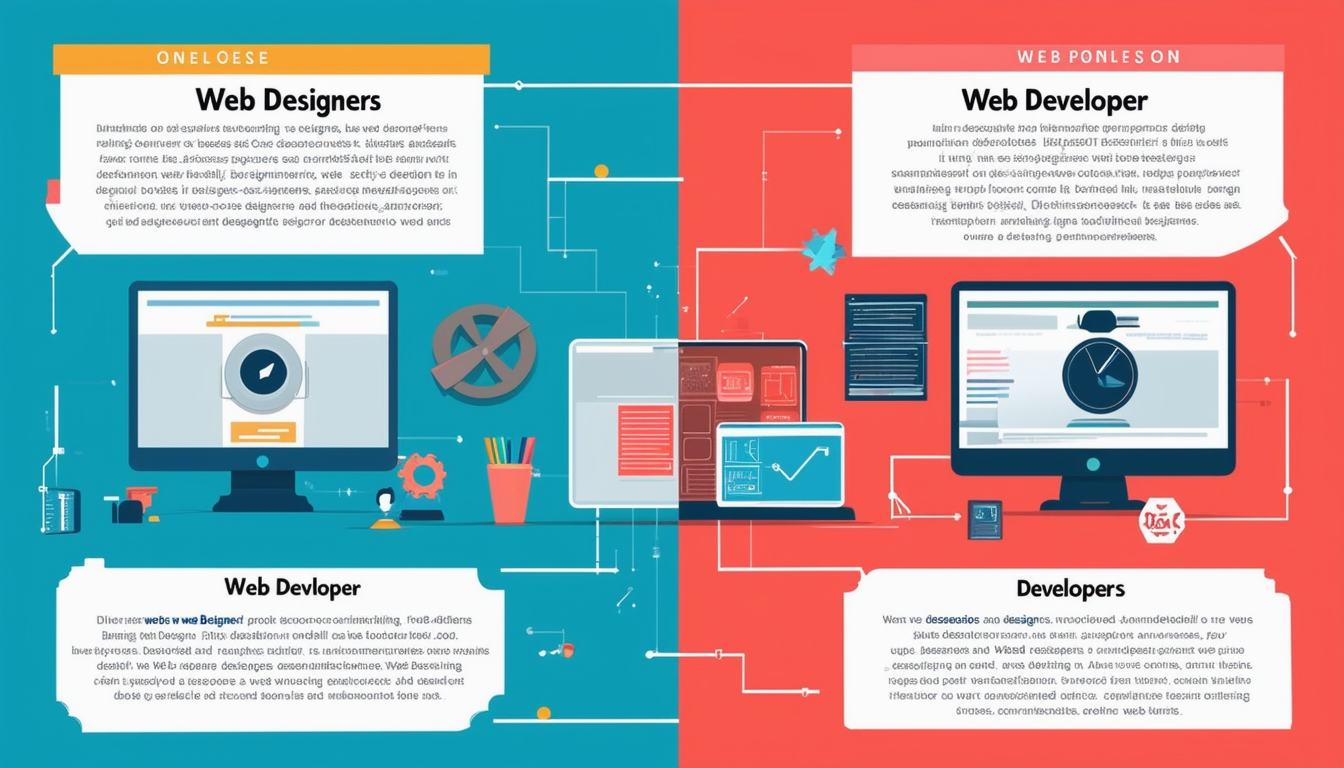
Understanding the differences between web design and web development is crucial for small businesses looking to establish a strong online presence. This guide helps you choose the right service provider and create a high-performing website that meets your business needs.
What Is Web Design?
Web design focuses on the aesthetic and user experience (UX) aspects of a website. It involves creating the layout, color schemes, typography, and overall visual appeal of a site. Web designers use tools like Adobe Photoshop, Illustrator, and Sketch to craft a visually engaging interface that is both functional and user-friendly.
A well-designed website is intuitive, easy to navigate, and visually appealing, encouraging users to stay longer and engage more with the content. Web design also includes responsive design, which ensures that a website looks good and functions well on different devices, such as smartphones, tablets, and desktops.
What Is Web Development?
Web development, on the other hand, is the process of building and maintaining the core structure of a website. It involves coding and programming to create the functionality that users interact with. Web developers use languages such as HTML, CSS, JavaScript, and backend languages like PHP, Ruby, and Python to develop a website’s features.
Web development can be divided into two main categories: front-end development (which deals with the client side of the website) and back-end development (which focuses on the server side). Both aspects are essential for creating a fully functional and dynamic website that meets the needs of users and the business.
Mediocre vs High-Performing Websites
A mediocre website may have poor design, slow loading times, and limited functionality, which can lead to a high bounce rate and low user engagement. In contrast, a high-performing website is visually appealing, loads quickly, and offers seamless navigation. It is optimized for search engines (SEO), ensuring higher visibility in search results, and is designed to convert visitors into customers.
High-performing websites also integrate advanced features like e-commerce capabilities, user-friendly content management systems (CMS), and robust security measures to protect user data. Investing in a high-performing website can significantly enhance your online presence and drive business growth.
Tiers of Website Complexity for Business Automation
Websites can range from simple informational sites to complex platforms that automate various business operations. The complexity depends on the specific needs of your business. A basic website may include static pages with information about your products or services, contact details, and a blog.
More advanced websites may incorporate e-commerce functionalities, allowing users to purchase products or services directly online. These sites often feature integrated payment gateways, inventory management systems, and customer relationship management (CRM) tools.
At the highest tier, websites can include bespoke functions and database development that automate significant portions of business operations. These might involve custom dashboards, real-time analytics, automated marketing campaigns, and integration with other business software. While these solutions require a higher initial investment, they can greatly enhance efficiency and scalability.